

Overflowing gutters are a common problem during storms. Here are the most likely causes and what homeowners can do about them.
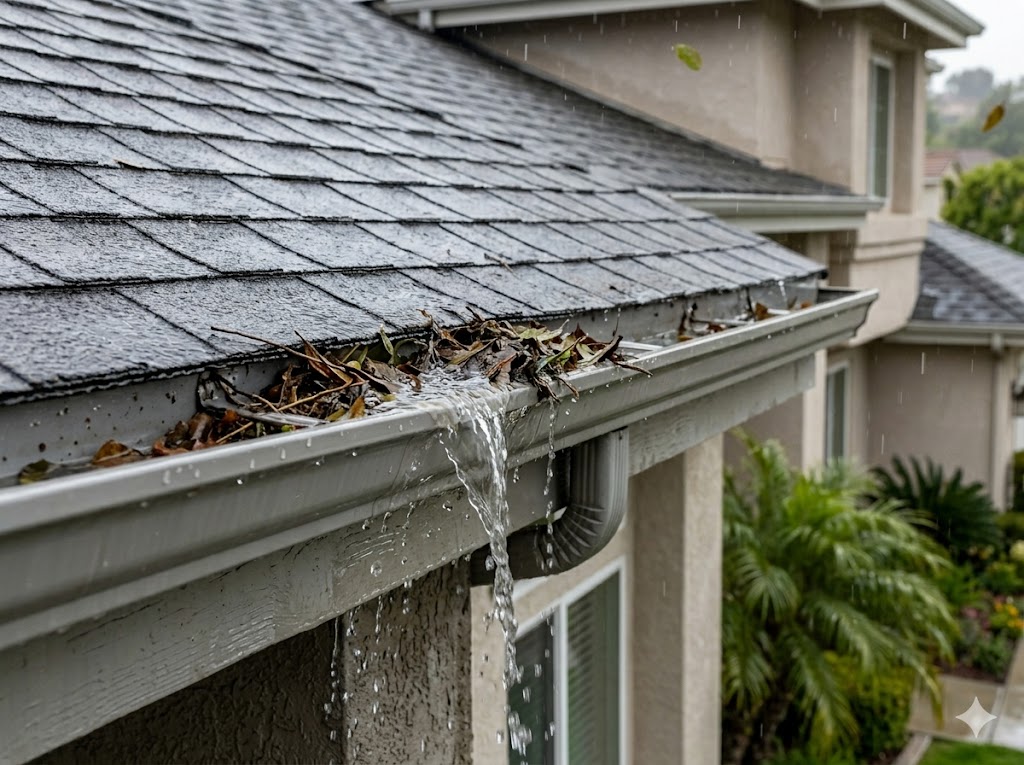
If your gutters overflow every time it rains, it is a sign that something is not working correctly.
Gutters are supposed to collect rainwater and move it safely away from your roof, siding, foundation, and walkways. When they overflow, water can spill down the exterior of the house, soak fascia boards, stain walls, damage landscaping, and even contribute to foundation issues over time.
Here are the most common reasons gutters overflow during rain and what can be done to fix them.
The most common cause of overflowing gutters is simple buildup.
Leaves, roof granules, twigs, dirt, and debris can block water flow inside the gutter channel or at the downspout opening. Once that happens, rainwater has nowhere to go and spills over the edge.
Signs of a clog include:
Cleaning the gutters and flushing the downspouts is often the first step.
Even if the gutter itself looks clear, the downspouts may be clogged.
Water may enter the gutter normally but get trapped when it cannot move downward and away from the home. This causes backup and overflow, especially during heavy rain.
A blocked downspout can often cause:
A professional cleaning can usually identify and remove the blockage.
Sometimes the issue is not a clog. The gutter system may simply be undersized for the roof area or rainfall volume.
If a roof collects a large amount of water, standard gutters may struggle to handle heavy downpours, especially on valleys or long roof runs. In these cases, upgrading to a larger gutter size or improving the downspout layout may help.
This is especially important if:
Gutters need a slight slope so water flows toward the downspouts.
If the pitch is too flat, or if sections have shifted over time, water may sit in the gutter instead of draining properly. During rain, standing water quickly turns into overflow.
Signs of poor pitch include:
Adjusting the slope may solve the issue.
Loose hangers or sagging sections can prevent water from flowing correctly.
When gutters start separating from the fascia, water may run behind the gutter instead of into it, or collect in low spots and overflow. This can also lead to wood rot and fascia damage if ignored.
This is often visible as:
Re-securing or replacing damaged sections may be necessary.
Some roof designs channel a heavy amount of water into one concentrated gutter section.
This often happens at roof valleys, where two slopes meet and create a stronger flow during storms. If the gutter below that area is not designed to handle the volume, overflow may happen even when the system is otherwise in decent condition.
Possible solutions include:
Gutter guards can help reduce debris buildup, but they are not a cure-all.
In some cases, water can overshoot certain styles of guards during heavy rain, or debris may still collect over time and reduce performance. If you already have guards but still see overflow, the system may need inspection or adjustment.
Overflowing gutters are not just annoying. Over time, they can cause real damage.
Possible consequences include:
Fixing gutter problems early is much less expensive than repairing the damage overflow can create.
If your gutters are overflowing during rain, the cause is usually one of a few things: clogs, blocked downspouts, poor pitch, sagging sections, undersized gutters, or drainage design problems.
The right fix depends on what is actually causing the overflow. Sometimes it is a simple cleaning. Other times, the system needs repairs or upgrades to work properly.
A professional inspection can help determine why the overflow is happening and what solution will protect your home best.