

Water damage often starts with small warning signs. Here are seven early signs homeowners should never ignore.
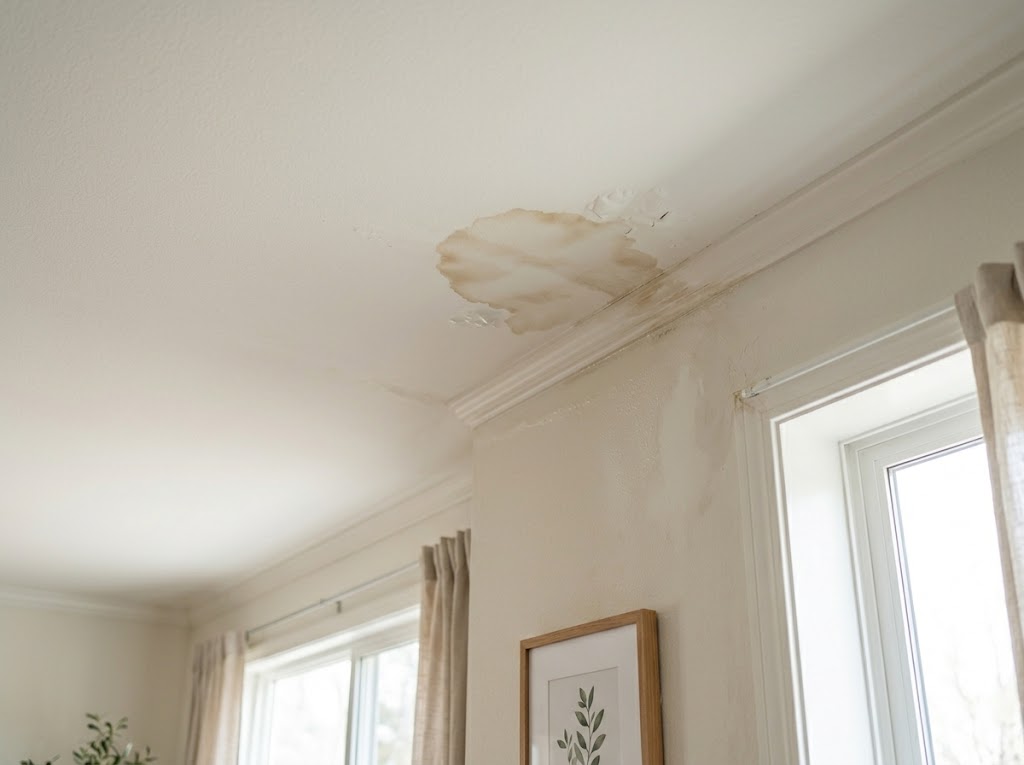
Water damage often starts quietly.
What begins as a small stain, faint odor, or minor paint bubble can turn into damaged drywall, warped flooring, mold growth, and expensive repairs if it is ignored for too long.
The earlier you catch water damage, the better chance you have of limiting the repair scope and protecting your home.
Here are seven early signs of water damage every homeowner should know.
One of the most obvious early signs is discoloration on ceilings or walls.
These stains may appear yellow, brown, or copper-colored and often grow slowly over time. Even if the area feels dry at the moment, the staining usually means moisture has already entered the material at some point.
Ceiling stains are commonly linked to:
A stain should never be ignored just because it looks minor.
When moisture gets trapped behind paint, the surface can begin to bubble, blister, or peel.
This is especially common around bathrooms, kitchens, windows, and exterior-facing walls. Many homeowners assume it is just old paint, but hidden moisture is often the real cause.
If repainting is done without fixing the source, the problem usually returns.
Drywall should feel solid.
If a wall or ceiling feels soft, swollen, fragile, or slightly warped, moisture may be inside the material. In more advanced cases, the drywall may begin to crumble or sag.
This is an important warning sign because it often means water has been present long enough to weaken the structure of the material.
A persistent musty smell is often one of the earliest clues that moisture is trapped somewhere out of sight.
This odor may come from:
Even if you do not see visible staining yet, unusual damp smells can signal hidden water intrusion that needs attention.
Water damage does not always show up overhead first. Sometimes it appears from the ground up.
Common signs include:
These changes often mean moisture is reaching the subfloor or wall edge.
Mold and mildew thrive in damp environments.
If you notice black, green, gray, or brown spotting on walls, ceilings, trim, or around vents, there may be an ongoing moisture issue behind it. Even small visible patches can indicate a larger hidden problem nearby.
Mold around windows or bathrooms may sometimes be surface-related, but repeated or spreading growth should always be taken seriously.
A sudden increase in your water bill can point to a hidden plumbing leak.
If you also notice damp spots, warm patches on flooring, wet cabinet interiors, or unexplained moisture near walls, the issue may be active and ongoing. Not all water damage comes from storms or roof leaks. Interior plumbing problems are also a common cause.
Small water problems rarely stay small.
When moisture is allowed to remain inside building materials, it can lead to:
Fast action can reduce both the cost and the disruption.
If you spot any of these warning signs, the best next step is to identify the source as quickly as possible.
Depending on the situation, the cause may involve:
A professional inspection can help determine where the moisture is coming from and what repairs are needed before the damage spreads further.
Water damage does not always begin with a major flood or obvious leak. More often, it starts with subtle warning signs like staining, odor, swelling, or peeling surfaces.
If you catch these early, you can often prevent much larger repairs later.
If you have noticed any of these signs in your home, it is worth having the issue inspected before minor moisture turns into major damage.